The Tale of the Tape: Setting the Stage for the Ultimate Ride
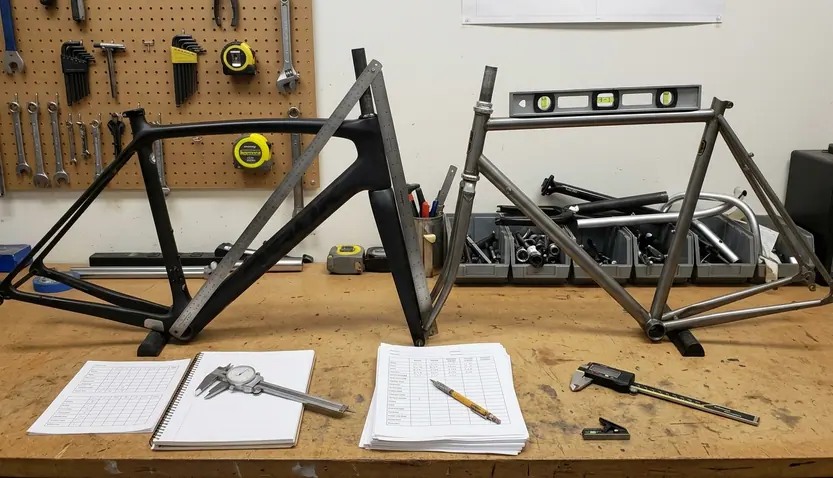
Giant's official Size M geometry chart gives the matchup its first clean number: the TCR sits at 545mm of stack, while the Defy sits at 558mm. That is a 13mm difference before anyone touches spacers, stems, bar rotation, saddle setback, shoes, cleats, or pride.
Thirteen millimeters sounds small in a garage. On pavement, it can decide whether your shoulders settle into the bars or creep toward your ears by the second hour.
This is why the Defy versus TCR choice matters more than a spec-table argument. You are not just choosing between two Giant road bikes. You are choosing your relationship with the road: how hard you can press into a climb, how long you can hold power on local routes, how much chatter reaches your hands, and how your lower back feels when the ride rolls past the point where coffee-stop enthusiasm has worn off.
I see the same buying mistake over and over in bike reviews, group rides, and parking-lot fit conversations. A rider wants the TCR because it looks like the fast choice. The top tube is lower, the posture looks sharper, and the race label hits the ego in the right place. Then the first long Saturday ride arrives, the core fades, the rider slides forward on the saddle, and the position starts stealing watts instead of saving them.
Bottom line: The TCR does not make a rider fast by magic. It rewards a rider who can actually use its lower, longer posture under fatigue.
That is the whole game. Geometry is not decoration. It is the first contract between your body and the bike.
The Starting Lineups: Stack, Reach, and Rider Posture
What the numbers do before the first pedal stroke
The common question is simple: which number matters more, stack or reach?
The practical answer is that stack and reach work as a pair. Stack sets the vertical height of the front end. Reach sets the horizontal distance from the bottom bracket to the top of the head tube. Together, they influence where your center of gravity lands between the wheels and how much weight your hands carry while your hips keep turning the pedals.
On the Size M race frame, the reach is 388mm. On the endurance model, it is 375mm. That 13mm reach gap matches the 13mm stack gap in the opposite direction: the TCR puts the rider lower and farther forward, while the Defy brings the cockpit back and up.
The TCR's lineup strategy is clear. It wants a flatter back, a more aggressive torso angle, and less frontal area. Pair that with a 73-degree headtube angle, and the front end feels quick when you lean on it. This is the bike that likes decisive inputs: close a gap, crest a roller, dive into a clean corner, repeat.
The Defy answers with a taller head tube feel, shorter reach, and about a 72.5-degree headtube angle. The posture opens the hip angle. It gives the lower back more room. It also reduces the demand on the cervical spine because the rider does not need to crane the neck as aggressively to see up the road.
The fit trap short-torso riders fall into
Here is where the race bike can get messy. Riders with short torsos sometimes try to adapt TCR geometry by slamming the saddle forward. It feels like a quick fix because the bars come closer. The cost arrives at the knee. Push the saddle too far forward and knee tracking over the pedal spindle becomes compromised, especially when fatigue pulls the rider deeper into the front of the saddle.
That is not a free adjustment. It changes how the whole pedaling system loads.
Frame charts provide a static baseline, not a finished fit. Hamstring flexibility and cervical spine mobility decide whether the TCR's lower stack becomes aerodynamic efficiency or just lower back pain. The same principle shows up in the biomechanical impact of trunk angle on cycling power output: posture can support power, but only when the rider can sustain the position without fighting it.
Recommendation: If you need to move the saddle forward to make the bars tolerable, you are solving the wrong end of the bike. Start with the frame geometry, then refine the cockpit.
First Half: Power Transfer and Climbing Dynamics
Pinnacle Mountain exposes the difference fast
Climbing gives the TCR its best argument. On steep pitches around Pinnacle Mountain, under typical conditions, especially when the grade bites and the road tilts into that sheltered 10 percent section lasting roughly 4 to 6 minutes, the TCR feels direct. Hold steady-state wattage in the 280 to 315 watt range and the bike keeps asking for more pressure on the pedals.
The compact road design matters here. The TCR does not just feel light under an out-of-the-saddle effort; it feels organized. Rock the bike beneath you, drive through the bars, and the frame translates those inputs into immediate forward motion. The sensation is not plush. It is sharp, almost impatient.
Initially, I tried to evaluate climbing efficiency with standing sprint intervals on the lower slopes of Pinnacle Mountain. After three sessions, I dropped that protocol because shifting wind conditions on the exposed lower road made the efforts too noisy to trust. The better test was steadier: hold power, stay seated when possible, then note how each bike behaved when cadence sagged and torque rose.
That changed the read.
The TCR still won the punchy moments. It liked the acceleration after a switch in rhythm. It felt better when a rider stood, reset cadence, and attacked the last third of a climb. If your training plans include repeated uphill surges or race-specific over-unders, the TCR has the cleaner response.
The Defy climbs with patience, not theatrics
The Defy climbs differently. It is not lazy, but it does not have the same snap when you jump out of the saddle. Its slightly longer wheelbase character settles the bike down. That stability works best with a seated, high-cadence grind where the rider keeps breathing under control and lets the gear turn.
Beginners often mistake that steadier feel for slowness. After a few longer climbs, the progression becomes obvious: the Defy lets you keep your torso quieter, your hands lighter, and your effort less spiky. The advanced tip is to stop trying to make it climb like a TCR. Let the Defy sit under you, stay seated longer, and save the standing effort for traction changes or the final ramp.
Risk Factor: If your favorite part of a climb is the first violent acceleration, the Defy can feel muted. If your favorite part is still having legs at the top, it starts making more sense.
Second Half: Compliance and Rough Tarmac Survival
Comfort becomes performance after the easy miles are gone
The second half of the ride is where the Defy starts taking territory back. Early miles flatter stiff bikes. Fresh legs can absorb road buzz. Fresh hands forgive a nervous front end. Then the route turns onto rough chip-seal, the shoulders tighten, and the debate changes from acceleration to survival.
This is not soft marketing language. Compliance changes how much power a rider can keep applying when vibration stacks up through the saddle, bars, and pedals.
The Defy's defensive strategy centers on its D-Fuse seatpost and handlebar system. The shape is designed to flex under load and reduce high-frequency vibration before that buzz reaches the rider's contact points. On coarse Arkansas tarmac, that matters more than it looks in a showroom. The bike lets the rider stay seated over ugly pavement instead of hovering above the saddle every time the surface breaks apart.
The TCR has improved as a modern race platform, and tire clearance helps. The race frame allows up to 32mm tires. The endurance frame allows up to 38mm. That difference opens a wider tuning window on the Defy, especially for riders who split time between smooth county roads, chip-seal connectors, and long charity rides where the route quality changes without warning.
Tires help, but they do not erase the frame
Dropping tire pressure from the low 70s psi to the mid 60s on 28c tires can make both bikes calmer. It takes the edge off small impacts and gives the contact patch a little more patience. On smooth tarmac, higher-volume tires at lower pressure can even mask frame stiffness differences for a while.
But that masking has a limit.
High-volume tires run soft do not fully compensate for the lack of vertical compliance in the seatpost when the road turns to rough chip-seal. The TCR still transmits more surface texture through the saddle and bar. Some riders like that raw feedback because it tells them exactly what the tires are doing. Others call it tiring after the third hour, and they are not being dramatic.
This matters in women's cycling conversations, too, because smaller riders can have less body mass pressing into the tires and frame. The same pressure that feels calm under a heavier rider can feel skittery under a lighter one. Fit, tire choice, and frame compliance need to be discussed together, not as separate upgrades.
Fit check: Tire pressure can tune the ride, but it cannot turn a race chassis into an endurance chassis when the pavement gets hostile.
The Final Whistle: Which Geometry Takes the Win?
The score depends on what you ask the bike to defend
The TCR wins on pure speed and agility. It is the sharper tool for riders who can hold a low torso, produce repeated accelerations, and stay comfortable with more road feedback coming through the contact points. On fast group rides, race-day surges, and short climbs where position discipline stays intact, the TCR feels alive.
The Defy dominates in endurance and rider preservation. Rides pushing shy of the 4-hour mark usually expose core fatigue, and that is where the taller, shorter geometry starts paying rent. Over distances upward of 60 miles, sustained power matters more than a posture that only works while the rider is fresh.
That is the distinction too many riders dodge. The TCR can be faster. The Defy can help more riders stay fast longer.
Choosing the Defy is not a compromise on speed. It is an investment in repeatable power, cleaner posture, steadier breathing, and fewer late-ride negotiations with your neck and lower back. For most local routes around Little Rock, that is the bike I would rather see under a strong recreational rider who wants to finish hard instead of merely start fast.
My recommendation is simple: unless you are actively pinning on a race number or you can hold an elite-level low torso without neck tension, buy the Defy. It is the superior Giant road geometry for most real-world cycling enthusiasts because it turns comfort into sustained power once rides push past just over 60 miles.