The Unspoken Pain of Compromised Cycling
Why do so many female cyclists accept chronic saddle pain and numb hands as a normal part of riding?
Too often, the answer starts with something a rider heard early: give it time, toughen up, or get used to the position. That advice turns a mechanical problem into a test of character. The rider keeps pedaling while shifting across the saddle, straightening one arm, shrugging her shoulders, or repeatedly shaking sensation back into her hands.
Those compensations are not obscure. Over a 12-week period of Saturday morning group rides from West Little Rock, they repeatedly appeared within the initial 20 miles. Riders often described the discomfort casually, as though pain belonged beside water bottles and spare tubes on every ride.
Critical Insight: Persistent pain is information. It identifies a mismatch among the rider, the bicycle geometry, and the contact points; it does not prove that the rider lacks resilience.
The underlying issue reaches beyond one saddle or stem. For decades, much of the cycling industry treated female riders as smaller versions of male riders. Yet reducing frame size does not automatically correct reach, shoulder position, pelvic support, brake access, or weight distribution.
True comfort begins when the bicycle fits the body that actually rides it. That requires more than choosing the smallest available frame.
The Legacy of “Shrink It and Pink It”
The old formula was blunt: start with a men’s frame, scale it down, add softer colors, and market it as a women’s bicycle. The paint changed more substantially than the engineering.
Historical geometry charts from 2018 through 2022 make the distinction visible. Comparisons of standard and women-specific size-small frames showed reach differences of 12mm to 15mm. Some scaled-down models nevertheless retained identical seat-tube angles, even though femur proportions influence where a rider can balance over the crankset.
Why Scaling Alone Misses the Rider
Two riders can share the same height without sharing the same proportions. Women commonly present different torso-to-leg relationships and shoulder widths from men of comparable height. Put a shorter torso and narrower shoulders on a long cockpit, and the rider must find the missing reach somewhere.
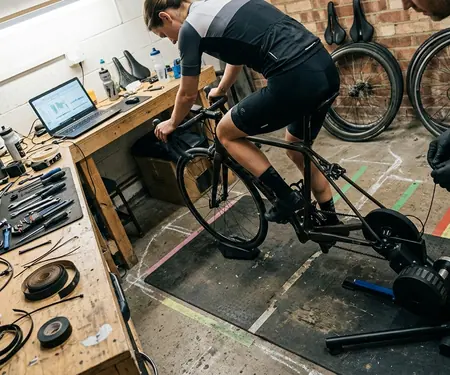
Usually, she rotates forward, locks her elbows, or slides toward the saddle nose. Each response alters pressure elsewhere. Locked elbows transmit road vibration into the hands and shoulders. A forward slide increases soft-tissue pressure. Excessive weight over the front wheel can also make cornering feel less settled.
Some women fit standard unisex frames exceptionally well. Body proportions, mobility, riding discipline, and preferred posture matter more than a label on the top tube. Still, many female riders on scaled-down platforms end up overreaching or carrying their weight in the wrong place. That conclusion concerns recurring geometry patterns, not a claim that every rider shares one anatomical template.
Risk Factor: A smaller frame may reduce stand-over height while leaving the effective cockpit too long. Stand-over clearance alone cannot establish fit.
The Anatomy of a True Women-Specific Fit
A sound fit works from the contact points inward. The saddle, handlebar, and controls determine how the rider meets the bicycle; stack and reach determine whether those contact points can occupy useful positions without distorting handling.
Saddle Support and Pelvic Rotation
Saddle width should support the sit bones in the rider’s actual cycling posture. Width by itself is not enough. Cutout placement and shape must correspond to pelvic rotation.
A rider in an aggressive, forward-rotated aero posture generally needs a wider cutout channel than a rider using an upright endurance posture. Installing a heavily relieved saddle without checking that relationship can move pressure rather than resolve it. The practical test is stable pelvic support with no persistent soft-tissue compression and no need to search for a tolerable position every few minutes.
Handlebar Width and Drop Depth
Stock 40cm or 42cm handlebars often spread a narrower rider’s arms beyond a neutral shoulder line. Initial professional fit sessions frequently call for a move to 36cm or 38cm bars. The narrower option can reduce shoulder tension, keep the wrists straighter, and make breathing feel less restricted when effort rises.
Drop depth deserves equal attention. A rider should reach the drops without collapsing through the torso or levering herself forward with rigid arms. If the drops remain effectively unusable, the bicycle has lost an important control position.
Brake Lever Reach
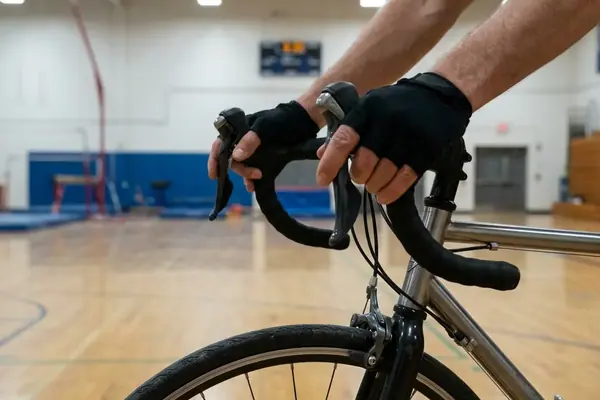
Control access is a safety requirement. In group assessments, bringing the brake blade 10mm to 14mm closer to the drops can let shorter fingers maintain a secure grip while braking. The rider should not have to rotate the wrist, release the bar, or stretch with the fingertip to engage the lever.
Stack, Reach, and Balance
Stack describes vertical frame height; reach describes horizontal frame length. Together, they set the boundaries of the cockpit before spacers, stems, and handlebars fine-tune it. A women-specific design can combine appropriate reach with a position that respects the rider’s lower center of gravity and keeps mass balanced between the wheels.
This is not merely about making an easy ride pleasant. Stable alignment improves force transfer through the hips and legs, preserves steering control under fatigue, and reduces repeated loading on irritated joints and nerves.
Recommendation: Select the frame by usable stack and reach first. Treat the saddle and cockpit components as fine controls, not as tools for rescuing fundamentally unsuitable geometry.
Lessons from the Saddle: The Liv Experience
What changes when a bicycle starts with female anatomical data rather than receiving women-specific parts at the end of production? The clearest answer appears when the road points down.
Liv builds its performance frames from the ground up around female riders. That distinction becomes tangible in weight distribution. On the steep, winding descents of Wye Mountain, a purpose-built geometry allows the rider to stay centered while applying light pressure through both hands. The front wheel holds its line without demanding constant correction, and corner entry feels deliberate rather than nervous.
Climbing reveals a different benefit. When reach and saddle position cooperate, the hips remain supported over the crankset. The rider can drive through the pedals without repeatedly sliding forward or bracing against the handlebar. Power delivery feels quieter: less upper-body negotiation, more force directed into the drivetrain.
Why a Short Stem Did Not Solve a Long Frame
One standard unisex climbing frame was adapted with a zero-offset seatpost and a 70mm stem. The changes reduced the apparent reach, but four weeks of riding exposed the trade-off. The shortened stem accelerated the steering response and made fast descents feel twitchy. A cockpit measurement had improved while the bicycle’s handling had deteriorated.
That comparison matters because component swaps can conceal a frame mismatch on a fitting stand. The road exposes the whole system.
Liv evaluations conducted over years of local Arkansas riding rely on more than a single polished test loop. One long-term test covered 2,400 miles across 14 months, including chip-seal roads and Wye Mountain descents. The editorial standard remains consistent: assess comfort, control, and power under familiar conditions long enough for compensations and handling traits to emerge.
How to Evaluate Your Current Setup
A rider does not need motion-capture equipment to identify the first signs of a poor fit. She does need a trainer or stable support, a phone camera, normal cycling kit, and an honest view of how her body behaves after settling into riding posture.
A Five-Step Home Assessment
- Record the side view. Pedal at a steady endurance effort for several minutes, then capture video without deliberately correcting posture. Look for locked elbows, elevated shoulders, or repeated movement toward the saddle nose.
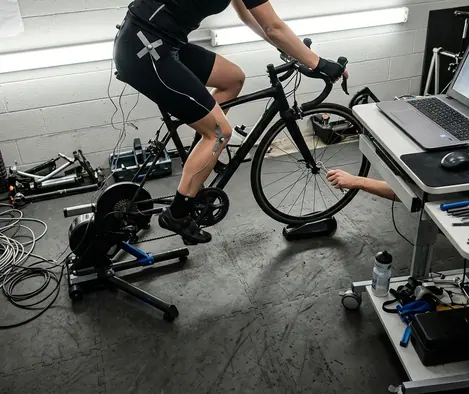
- Record the rear view. Watch the pelvis during a sustained effort. In group assessments, more than 2cm of lateral hip rocking during a threshold effort is a red flag. The saddle may be too high, but leg-length differences, cleat position, stability, or mobility can also contribute.
- Check hand sensation. Note when tingling begins and which fingers it affects. Training logs showing ulnar nerve tingling within 45 to 60 minutes point toward excess hand pressure, wrist position, bar shape, or cockpit reach.
- Test control access. From the hoods and drops, confirm that each brake lever can be engaged while the remaining fingers keep a secure hold on the bar. Check both sides independently.
- Inspect saddle stability. Look for side-to-side searching, repeated forward sliding, or one hip dropping more than the other. These movements often matter more than whether a static knee position matches a textbook image.
Micro-Adjustment or Professional Fit?
Small, reversible changes suit a rider who has no persistent pain and can name one clear issue. Saddle height can move in modest increments. Lever reach can be adjusted within the control manufacturer’s range. A spacer or stem change may refine an already appropriate frame.
Change one variable at a time, mark the original position, and test the result on a familiar route. Altering saddle height, setback, and stem length together makes cause and effect impossible to separate.
Persistent numbness, recurring knee pain, visible hip rocking, unstable descending, or discomfort that returns after each adjustment warrants a professional fit. A comprehensive 3D motion-capture session typically takes just over 2.5 hours and can reach 3 hours. Training logs guide the timing of follow-up micro-adjustments, usually after 150 to 200 miles, once the rider has adapted and real riding patterns have surfaced.
Risk Factor: Static home checks cannot reproduce dynamic pedaling loads. If pain appears only during high-wattage threshold efforts, a plumb-line assessment will not identify the root cause.
A professional session should examine the rider under load, not simply place joints at preset angles. It should also preserve handling. Recommending a very short stem to compensate for an unsuitable frame may improve reach on paper while weakening control on fast local routes.
Demand Better From Your Bike
The progression from discomfort to control begins with a change in premise. Saddle pain, numb hands, and defensive descending are not admission fees for women’s cycling. They are reasons to examine the system.
Little Rock riders can strengthen that standard by discussing fit openly, comparing experiences without treating one body shape as universal, and supporting shops that take female cyclists seriously. A careful shop asks about local routes, effort level, injury history, control access, and riding goals before reaching for a replacement component.
Confidence follows when the bicycle stops demanding constant correction. Better balance leaves attention available for the next corner, the pace line, and the climb ahead.
Critical Insight: The rider should not be trained to tolerate a mechanical mismatch.
Stop adapting the body to the bike: begin with a professional women-specific fit assessment, then require the bicycle to be adapted to the rider.