In this Article
- What Does It Take to Dominate the Grand Tours?
- Tom Dumoulin’s Historic Ride to the Maglia Rosa
- Conquering the Summits: Barguil and the Polka-Dot Jersey
- Securing the Green Jersey with Aerodynamic Precision
- Engineering the Future: Scope and Limitations of Pro Gear
What Does It Take to Dominate the Grand Tours?
How do you keep a bicycle functioning flawlessly when a rider is punishing it across a continent? Winning consecutive Grand Tours brings a physical and mechanical toll that most amateur riders rarely consider. Start with the racing calendar itself. A standard Grand Tour demands completing 21 stages raced over 23 days—covering upwards of 3,500 kilometers.
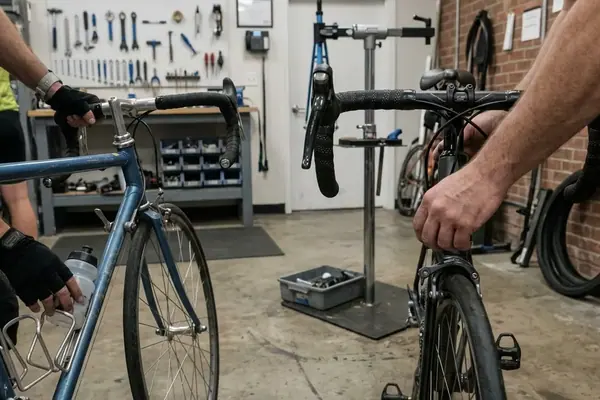
During practice and race preparation, mechanics determine gear ratios and frame allocations based on daily elevation profiles. They prioritize drivetrain durability over absolute weight savings for the chaotic opening week of a three-week stage race. The unsung heroes of Team Sunweb's 2017 success were the certified mechanics washing and tuning upward of 30 individual frames nightly between 18:00 and 22:00 in team service schedules. That grueling routine gave Giant’s engineering team a real-world proving ground, pushing materials hard before they ever reached a consumer showroom.
Tom Dumoulin’s Historic Ride to the Maglia Rosa
I remember watching the 100th edition of the Giro d'Italia in May 2017. Tom Dumoulin captured the coveted Maglia rosa, changing how many fans view time trial specialists in the high mountains. His overall victory relied heavily on the Giant Trinity Advanced Pro TT as the crucial time trial machine that secured his win against pure climbers.
To secure that advantage, the engineering team adjusted the cockpit extension angles millimeter by millimeter in the wind tunnel during winter camp. They needed to optimize the rider's frontal area without compromising sustained power output. While wind tunnel data is highly accurate, this approach relies on the assumption that the rider possesses the core strength to hold the aggressive position for the entire duration. The payoff showed during the 39.8-kilometer individual time trial distance per competition results. Dumoulin was sustaining speeds over 50 kilometers per hour in crosswinds, a feat that requires both aerodynamic efficiency and immense physical stability.
Critical Insight: Aerodynamic optimization is useless if the rider cannot produce power. The millimeter-precise cockpit adjustments allowed Dumoulin to maintain his aerodynamic tuck while generating massive wattage.
Conquering the Summits: Barguil and the Polka-Dot Jersey
At the 2017 Tour de France, the focus shifted from flat-out speed to conquering the high peaks. Warren Barguil delivered a spectacular Stage 18 victory on July 20, 2017. He dominated the mountains to win the Polka-dot jersey, proving that Giant's climbing geometry could outmaneuver the competition on the steepest gradients.
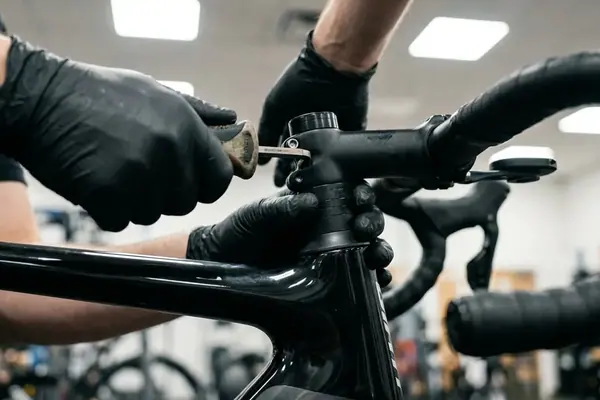
Climbing at this level requires absolute precision and a ruthless approach to equipment selection. Per race profiles, Barguil faced long climbs averaging close to a 9% gradient. To meet regulatory limits set by the Union Cycliste Internationale (UCI), mechanics stripped his total bicycle weight down to exactly 6.8 kilograms. Every bolt, cable, and wrap of bar tape was calculated.
The climbing specialist initially tested a fully integrated, one-piece aerodynamic bar and stem combination during spring preparation races. Mechanics dropped it in favor of a traditional two-piece setup for the high mountains. This allowed for finer rotational adjustments to match his out-of-the-saddle climbing posture, proving that sometimes traditional adjustability trumps modern integration.
Securing the Green Jersey with Aerodynamic Precision
While Barguil conquered the summits, Michael Matthews served as Team Sunweb's premier sprinter. He captured the Green jersey by dominating the points classification. Sprinting requires managing explosive forces and chaotic pack dynamics. Matthews was executing sprint finishes upward of 1,400 watts for about 12 to 15 seconds.
The conditions were brutal, with ambient tarmac temperatures reaching shy of 35 degrees Celsius. The aerodynamics team analyzed yaw angles from previous sprint finishes. They decided to prioritize ventilation ports on the trailing edge rather than a fully closed shell to manage core temperatures during these explosive efforts.
Recommendation: When selecting an aero helmet for summer racing, prioritize trailing edge ventilation. A fully closed shell might save a fraction of a watt, but overheating is guaranteed to cost you hundreds of watts in the final sprint.
Engineering the Future: Scope and Limitations of Pro Gear
Riders often walk into the shop wanting the exact bike Dumoulin or Matthews rode. The TCR Advanced SL and Trinity Advanced Pro TT are pinnacle machines. However, their aggressive geometry is highly specialized for the professional peloton.
Professional race frames can show stack-to-reach ratios around 1.35 in product geometry charts, compared to about 1.45 on endurance models. Product managers reviewed carbon layup schedules from the race frames. They decided to alter the modulus in the consumer versions to introduce vertical compliance for non-professional riders.
Community observation suggests that riding a pure pro-spec frame on 120-mile weekend routes on chip-seal roads in the Ouachita Mountains is a mistake. The ultra-stiff carbon layup required to transfer massive sprint power translates every vibration of rough local chip-seal directly to the rider's lower back—making these exact pro-spec frames punishing for casual rides exceeding two hours. Since 2019, our ongoing conversations with local fitters confirm that endurance geometry keeps amateur riders faster over long distances.
Risk Factor: Purchasing a bicycle with a stack-to-reach ratio in the 1.35 range without professional fitting can lead to severe lower back pain, especially on abrasive local chip-seal routes.
Related: Translating Professional Bike Fit to Local Arkansas Routes