In this Article
- The 6:45 AM Standoff at Two Rivers Park
- Deconstructing the Intimidation Factor
- The Turning Point: Finding Safe Harbors
- Bridging the Gap to the Mixed Peloton
- Trusting Your Machine and Yourself
- Stop Waiting Until You Are ‘Fast Enough’
The 6:45 AM Standoff at Two Rivers Park
The air read 45 degrees that morning at Two Rivers Park. Dawn had started to lift over the bridge, and I stood with both hands locked around the hoods while riders rolled into the lot wearing matching kits. Their 50mm deep-section carbon rims made that low, hollow sound that seems faster than any bicycle has a right to sound before sunrise.
I parked at the far end of the lot. From there, I could watch the rollout protocol before deciding whether to clip in and join the main cluster. Who checked in with the ride leader? Did anyone introduce new riders? How quickly did the front row form? Those small observations gave me more useful information than another week of worrying at home.
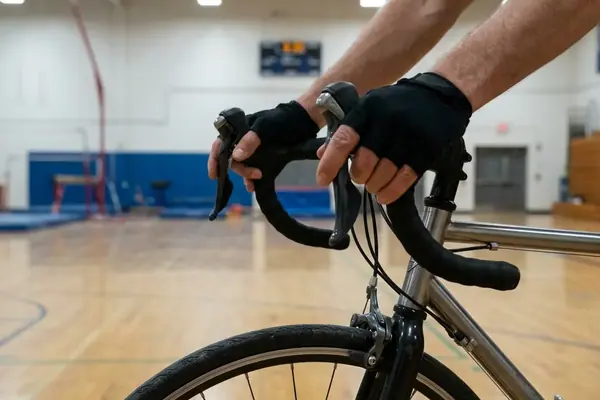
The physical sensation was immediate: tight shoulders, shallow breathing, one foot ready to unclip. The internal questions arrived just as quickly. Would I miss a turn? Touch a wheel? Make everyone wait?
Underneath those questions sat the real conflict. I wanted the conversation, the shared miles, and the feeling of belonging to the local cycling community. I also feared becoming its weakest link.
Watch Before Rolling
Arriving early creates room to read the group. Look for a safety briefing, clearly identified leaders, and riders who explain the route without acting annoyed. A welcoming group usually reveals itself before the first pedal stroke.
Read the Rollout
Park, prepare your bike, and watch how the group gathers. Fifteen quiet minutes can answer whether the pace, leadership, and atmosphere match what the ride description promised.
Deconstructing the Intimidation Factor
Why do capable female cyclists keep choosing solo miles along the Arkansas River Trail when group rides could offer company, drafting, and route knowledge?
The easy answer is speed. The fuller answer includes three distinct fears: getting dropped, causing a crash while learning paceline etiquette, and feeling like an imposter among riders who appear to know every signal and unwritten rule.
A rider averaging 14 to 16 mph alone on the trail may assume she lacks the fitness for a group. That comparison misses the effect of drafting and the way a steady paceline shares work. At the same time, drafting introduces proximity. Speed can feel manageable while the wheel ahead feels alarmingly close.
Where the Anxiety Starts
I break the concern into physical spacing rather than treating confidence as a personality trait. In a tight paceline, the visual shock often comes from seeing wheels enter what feels like a 12-inch overlap tolerance. A slight sideways movement suddenly looks enormous. Add a 12 mph headwind, and riders bunch as everyone searches for shelter. With a tailwind, the line stretches and reaction time feels different.
That is why paceline anxiety and drafting benefits scale differently with wind direction. The rider needs practice reading movement, not a lecture about being braver.
- Getting dropped: Ask whether the advertised pace applies on flats, climbs, or across the whole route.
- Causing a crash: Learn predictable hand positions, smooth braking, and verbal hazard calls before riding close.
- Feeling out of place: Introduce yourself to the leader and say plainly that you are learning group positioning.
Cycling culture can make these skills look automatic. Experienced riders use shorthand, arrive in established friendships, and move through a paceline without explaining what they are doing. New riders often interpret that fluency as exclusion. Sometimes it is simply habit, though the effect still lands hard.
The official group ride etiquette fundamentals provide a useful baseline before practicing with a patient group.
The Turning Point: Finding Safe Harbors
My first attempt involved a fast mixed evening ride. The group accelerated immediately off the line, leaving no space to learn drafting fundamentals or decode the calls moving backward through the pack. I shifted to a dedicated beginner women’s ride, and the learning curve changed on the first outing.
The difference came from permission to practice.
Build One Skill at a Time
Women-only and beginner-focused rides create a useful training environment because the group can slow down long enough to isolate each action. Riders can hold a 1-meter gap to the rear wheel ahead, notice how that distance changes through a corner, and learn to look beyond the wheel rather than staring directly at it.
- Start with line control. Pick a steady path and avoid drifting toward the rider beside you.
- Add obstacle calls. Point and speak early enough for the message to travel backward.
- Practice drafting. Hold the 1-meter gap while keeping your upper body relaxed.
- Rotate through. Use 2-minute pulls at the front so every rider experiences the wind and the handoff.
Shared vulnerability matters here. When another woman asks how to rotate off the front, the question opens the door for everyone who was afraid to ask. When someone wobbles while reaching for a bottle and then settles back into line, the group sees learning happen in real time.
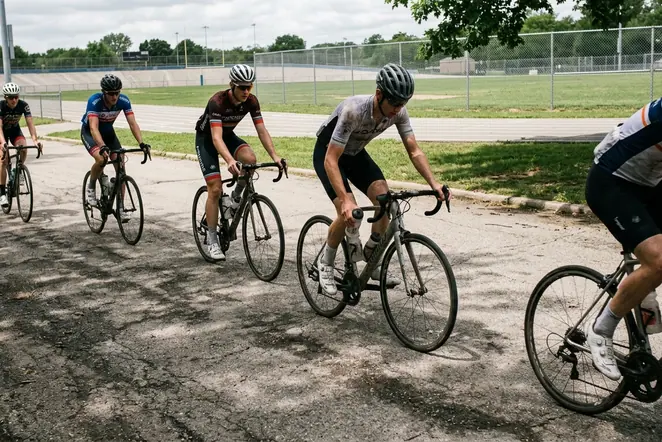
Confidence grows from repeated, ordinary corrections. Hold the line. Ease the pedals. Call the pothole. Rotate off. Rejoin at the back.
Close the Gap
Use the 1-meter gap as a learning reference, then adjust under the ride leader’s direction. Smooth pressure on the pedals keeps spacing steadier than repeated surges and braking.
Bridging the Gap to the Mixed Peloton
The broader mixed peloton becomes much less mysterious once drafting, obstacle calls, and line control feel familiar. The next decision is choosing a group whose behavior matches its listing.
I compare posted route elevation, stated average speed, regroup points, and leader expectations before rolling out. Three weekend options may all use the label “social,” yet offer completely different experiences. A C-pace group advertising strict regrouping on climbs provides a clearer entry point than a vaguely described ride built around whoever reaches the front first.
Questions for the Ride Leader
Arrive before the briefing and ask direct questions:
- Does the group hold 17 to 19 mph on flat sections, or is that the full-route average?
- Where does the ride regroup after climbs?
- Who sweeps the back if a rider has a mechanical problem?
- How are pace changes communicated from the front?
Then state your own boundaries. Tell the leader that you can hold the listed flat pace, that you are still developing confidence in close quarters, or that you plan to sit near the back rather than rotate through immediately. Clear information gives the leader something practical to work with.
On the road, claim enough space to ride predictably. Keep your line through corners, signal before moving laterally, and pass hazard calls backward with a 3-second reaction buffer whenever conditions allow. A quiet rider can still communicate decisively.
The Pace-Limit Catch
Not every ride will fit. Finding the right B- or C-pace group takes trial and error, and labels alone offer limited protection. The key qualifier is enforcement: ride leaders must moderate the advertised speed. Joining a no-drop ride that splinters on the first 4% grade strips away both the drafting benefit and the trust created at the briefing.
Advertised Means Enforced
If the front repeatedly exceeds the posted pace or ignores regroup points, move to a better-led ride. Staying with an undisciplined pack does little for confidence or skill development.
Trusting Your Machine and Yourself
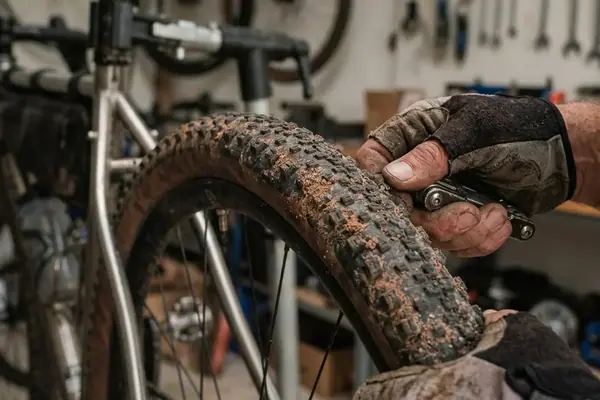
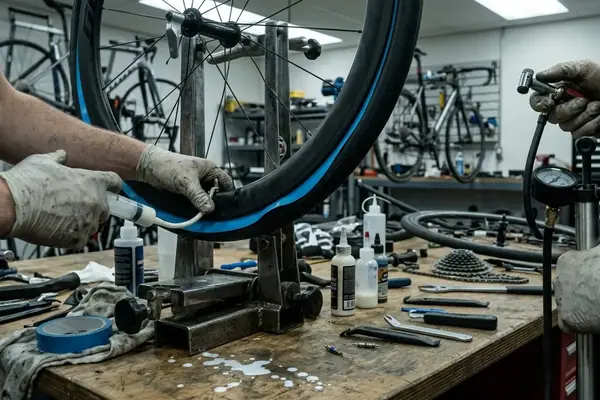
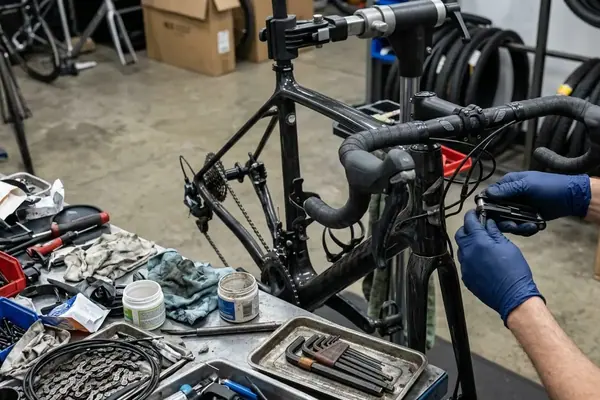
Mechanical self-sufficiency changes the way a rider enters a group. A strange tire sound stops feeling like an emergency. A puncture becomes a task with a known sequence.
Bike fit contributes to the same calm. On a properly fitted Liv Langma, stable contact points make it easier to hold a line, look over a shoulder, and reach a bottle without shifting across the road. The goal is predictable control for the entire ride.
Remove the Mechanical Burden
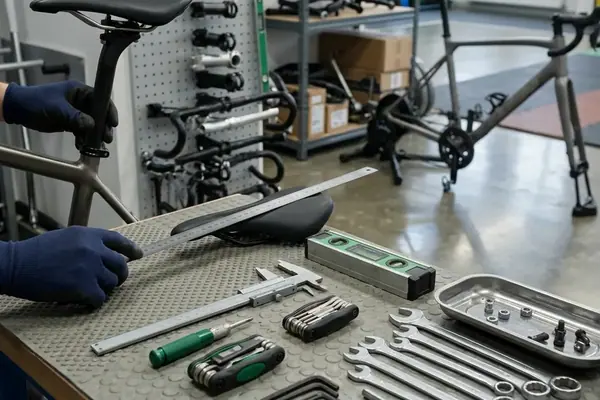
The useful preparation is specific. Set tire pressure before leaving home; 65 psi provides the intended grip for this setup on damp morning tarmac. Check that both wheels spin freely, squeeze the brakes, and confirm that the saddlebag contains what the tire system requires.
For the Liv Langma setup here, switching from standard butyl tubes to tubeless removed a major psychological barrier. A CO2 inflator and dynaplug tool stay in the saddlebag. Knowing how to use them matters as much as carrying them.
- Practice locating and plugging a puncture at home.
- Learn how the wheel releases and seats in the frame.
- Rehearse inflation without the pressure of waiting riders.
- Check the bike the evening before a morning rollout.
Each solved mechanical question releases attention for the group itself: spacing, wind direction, hand signals, and the rider ahead. That makes it easier to ride confidently.
Stop Waiting Until You Are ‘Fast Enough’
The illusion of needing to become fast enough before joining a group keeps riders circling the same solo route. Group comfort develops inside a group. Fitness gained alone cannot teach the timing of a rotating paceline, the sound of a hazard call moving backward, or the feel of sheltering from a headwind.
A Four-Week Commitment
Treat the first two weeks as reconnaissance rather than a fitness test. Commit to a 4-week schedule on the same local morning no-drop ride. Consistency lets you learn the leader’s signals, recognize steady wheels, and see where the 20-mile introductory route becomes exposed or technical.
- Arrive 15 minutes before the safety briefing.
- Introduce yourself to the ride leader.
- Choose a position in the rear half of the group.
- Focus on one skill, such as holding a line or relaying calls.
- Return the next week before judging your progress.
You already belong at the starting line when you can ride the stated route, follow instructions, and communicate honestly. Speed grows through training plans and repeated miles. Group confidence grows by showing up.
Commit to the next local no-drop ride this weekend, arrive early for the briefing, and roll out with the group regardless of your current fitness.