From Shrunken Men's Frames to Ground-Up Women's Layups
Roll out past Pinnacle Mountain toward Roland on any Saturday morning, and the pavement quickly changes character. Smooth city asphalt gives way to rural Pulaski County chipseal, where fractured rock measuring 9mm to 12mm sits baked into the tar. At about 18 mph, rolling across this surface sends a relentless 35 to 50 Hz vertical buzz straight through the dropouts. When you are building up training plans for an autumn Arkansas century, that specific frequency is what leaves your lower back knotted and your hands tingling by mile sixty.
For years, women's cycling equipment struggled to handle this kind of abuse. Frame development teams originally approached women-specific geometry by bolting 70mm stems and 38cm handlebars onto small unisex molds. Riders hated the harsh feel, and testing eventually showed why: cyclists under 125 pounds simply could not generate the vertical load required to flex tube profiles originally laid up for 175-pound riders. Those early frames rode like rigid aluminum pipes over battered county roads.
Between 2008 and 2014, the industry shifted away from component-swapped unisex molds toward dedicated carbon layup schedules tailored to women's lower-body power dominance and pelvic dimensions. When Liv engineered the Avail platform from scratch around a female rider's center of gravity, they promised genuine vertical compliance for lighter riders. Yet a pressing question remains for anyone logging long local routes out of Little Rock: how much of that factory-engineered carbon deflection actually survives four hours of Pulaski County chipseal?
Advanced-Grade Composite Layup and Tube Shaping Under Load
How does a carbon frame distinguish between a hard pedal stroke up a steep grade and a sharp jolt from a cracked culvert? It comes down to directional fiber orientation and size-specific ply counts.
Instead of wrapping every frame size in the same thickness of composite material, Liv scales the carbon schedule to match rider mass. An XS frame uses roughly 14 to 18 fewer composite plies along the top tube and seatstays than an M/L frame. Because of this tuned reduction in wall thickness, a 115-pound rider gets much the same vertical deflection over a pothole as a 160-pound rider aboard a larger size.
To keep the bike snappy when the road tilts upward, carbon engineers oriented unidirectional T700 sheets at 45-degree angles around the bottom bracket shell to resist torsional pedaling loads. Paired with an 86.5mm press-fit bottom bracket shell, this layup maintains lateral chainstay rigidity during out-of-the-saddle climbs up the 9% to 12% grades west of Little Rock. Meanwhile, the upper rear triangle does the opposite job. The seatstays taper into flattened oval profiles that bow outward slightly under vertical saddle impacts, acting like leaf springs over heavy expansion joints.
Still, carbon fiber has a mechanical boundary. While the rear triangle absorbs sharp, low-frequency bridge-joint impacts with ease, that continuous 35 to 50 Hz buzz from rough Arkansas asphalt moves too fast and carries too little amplitude to flex the main frame tubes. Damping that high-frequency chatter requires help from the components bolted into the frame.
Where the D-Fuse Seatpost and Contact Points Take Over
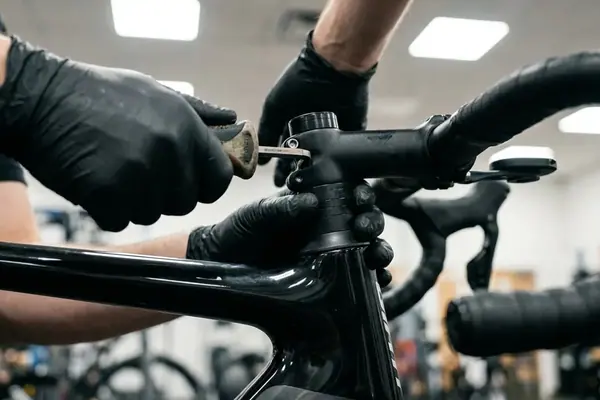
When preparing riders for 100-mile regional rides, fitters initially tried double-wrapping handlebar tape over round alloy bars to combat hand numbness on rough asphalt. We dropped that approach after finding the added diameter fatigued smaller hands on bumpy descents. Switching to the Liv Contact SL D-Fuse composite bar solved the issue from the inside out: its flattened profile allows up to 10% more downward flex under palm pressure while keeping the grip circumference compact.
The cockpit ergonomics pair a short 68mm reach and a shallow 120mm drop with an 8-degree downward flare. Across 5-to-6-hour saddle sessions, this geometry rotates the wrists into a neutral posture that reduces ulnar nerve compression and keeps shoulder tension at bay.
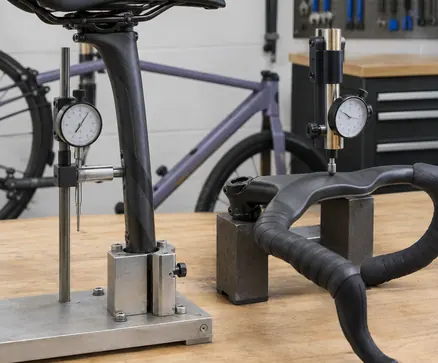
Out back, the matching D-shaped composite seatpost handles the heavy lifting for the pelvis. As detailed in Liv Cycling's official Avail Advanced engineering documentation, the flat rear profile of the post permits backward deflection under saddle load while preventing lateral wobble when you stand to sprint. Under peak impact loads, the post allows up to 12mm of rearward and downward excursion.
Frame Size Clearance Limit
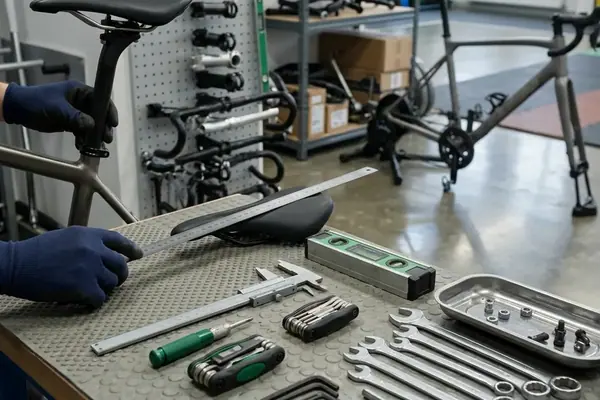
Riders seated on an XS frame with an inseam shorter than 27 inches often leave less than 90mm of exposed seatpost above the integrated collar, which mechanically locks out the carbon shaft's ability to bow backward over expansion joints.
When that mechanical lockout happens on a petite setup, high-frequency chipseal vibration bypasses the seatpost entirely and travels straight into the rider's pelvis. Maintaining at least 85mm to 100mm of clear carbon post above the top tube junction is required so the shaft can cycle through its deflection arc without bottoming out against the internal wedge clamp.
Dialing Tire Volume and Saddle Tilt for Arkansas Century Routes
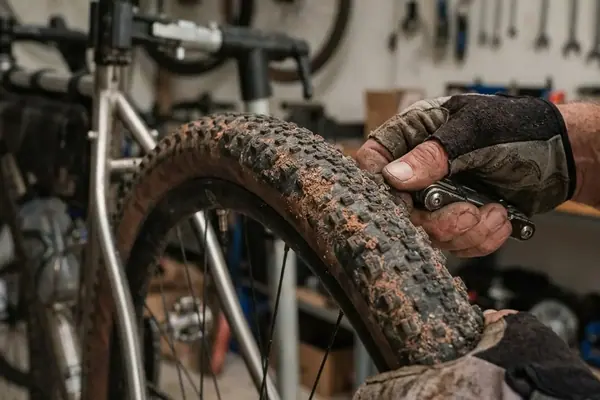
Most riders picking up a new endurance bike leave the shop on the factory setup: 32mm tires inflated to 65 PSI. On smooth greenways, that feels crisp and fast. Take that same 65 PSI setup out on weathered county pavement, and the tires bounce off the tops of those 9mm to 12mm aggregate stones, transmitting every bit of chatter straight into the fork crown and rear dropouts before the carbon layup can react.
In our bike reviews and local test loops, pneumatic compliance always serves as the first line of defense. Lowering a stock 32mm tubeless setup from 65 PSI down to a 48-to-52 PSI window for a 130-pound rider immediately damps high-frequency surface chatter across 40-to-60-mile stretches of battered pavement. If you want to push comfort even further for all-day rides, exploit the Avail's generous 38mm frame clearance by mounting supple 34mm or 35mm tubeless casings.
To lock in your setup for long Arkansas miles, follow this progression:
- Verify Seatpost Excursion: Check that you have at least 85mm to 100mm of exposed carbon shaft above the frame collar so the D-Fuse post can flex freely.
- Level the Saddle Nose: Because the post arcs backward and slightly downward under load, set your saddle flat or with a hair of downward tilt (around 1 degree) while static on the workstand so it does not point upward when flexed.
- Stage Your Tire Volume: Run the stock 32mm tires at 48 to 52 PSI for mixed city rides, or step up to 35mm tubeless casings when your route stays on coarse rural chipseal all day.
Grab a tape measure right now and check your exposed D-Fuse seatpost height to ensure you have at least a palm's width (85mm to 100mm) of clear carbon above the top tube clamp, then drop your tubeless tire pressure by 5 PSI before rolling out on your next rough pavement loop out of Little Rock.